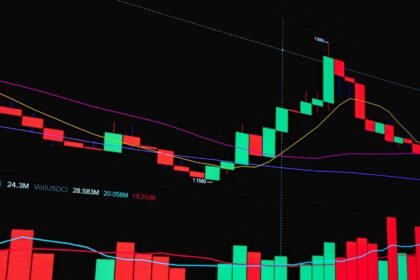

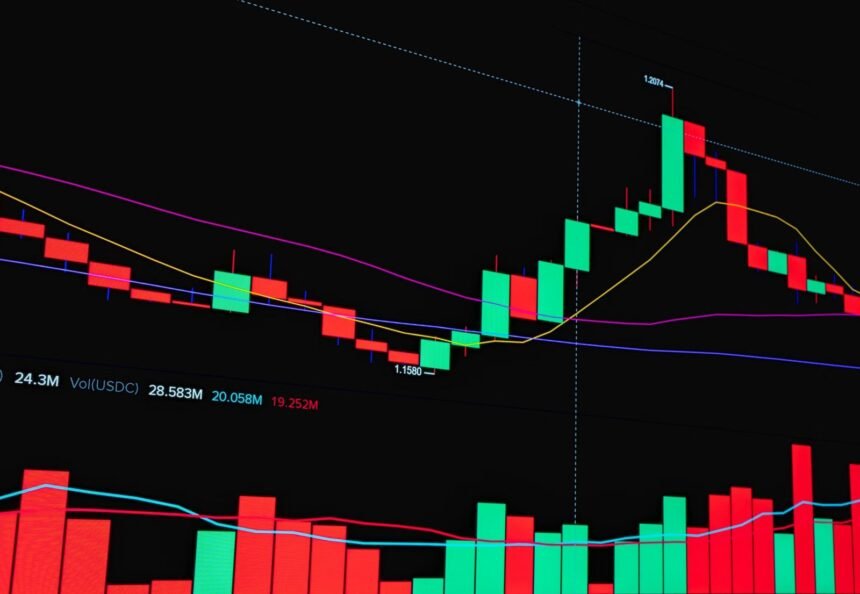
On TradingView, Wall Street rebounds after Nvidia reinstates Jensen Huang
TradingView charts showed a sharp early rebound in U.S. stocks on Monday, November 23, 2026, according to the available account. The Nasdaq Composite was up 6% at 9:35 a.m. New York time after losing 10% the previous week. The account also said Nvidia had reinstated co-founder Jensen Huang as chief executive. Related reading: CNBC Search Interest Accompanies Nvidia Investigation Into Jensen Huang and Megaspeed Links.
The account put the early gains at 4.1% for the S&P 500 and 2.1% for the Dow Jones Industrial Average. U.S. stock index futures had already pointed to a higher open before news of Huang’s reported return. The leadership change and the exact market figures could not be independently verified. Related reading: Jensen Huang net worth drop: Reported Wealth Loss and Ranking Change Remain Unverified.
What did TradingView charts show at Monday’s open?
The Nasdaq Composite led the reported rebound with a 6% gain at 9:35 a.m. New York time. The S&P 500 rose 4.1% in early trading, and the Dow Jones Industrial Average gained 2.1%, or 1,005 points. All three benchmarks were higher following their losses on Friday.
Friday’s closing levels provide the baseline for those gains. The S&P 500 ended November 20 at 6,910.39, down 3.7% for the session. The Nasdaq Composite closed at 22,617.73 after falling 5.3%, and the Dow finished at 48,147.33 after a 1.9% decline.
Across the week, the S&P 500 lost 8.6% and the Dow shed 8%. Friday’s decline also left the Nasdaq down 2.7% for the year. The AP excerpts describe a 10% weekly Nasdaq loss and a 6% rebound led by AI stocks. Those excerpts leave the timing of Nvidia’s leadership announcement unconfirmed.
The Nasdaq had the largest Friday decline and the largest reported early Monday gain of the three indexes. Its Monday figure captured trading five minutes into the regular session. Friday’s percentage was measured at the close, so comparing the two shows how much ground the Nasdaq had regained by that early point on Monday.
Why did Nvidia stock jump after Jensen Huang returned?
Nvidia shares reportedly rose 27.8% in early trading after the company brought Huang back as chief executive. His reported return resolved the question of who would lead the chipmaker after a week in which its shares fell nearly 23%. The timing alone leaves the announcement’s contribution to the rally uncertain.
Nvidia’s weight in the S&P 500 helps explain why a move in its shares matters to the broader market. Heading into Monday, a 1% move in Nvidia had more influence on the benchmark than an equivalent move in all but two of its constituents, according to the account. A swing of the size reported Monday could therefore have had a sizable effect on the index.
The reported gains extended to companies involved in building and operating data centers. Cloud computing provider CoreWeave gained 26.7% in early trading, GE Vernova rose 8.7%, and Caterpillar climbed 6%. Those companies have different roles in the same buildout. Data centers need computing capacity, equipment to supply power, and machinery to build the facilities.
Related reading on MyViralBox includes Ed Sheeran Superfan Ties the Knot with Lookalike in Hilarious Ceremony!
How did stock index futures differ from the opening market moves?
U.S. stock index futures pointed to gains of more than 2% before the opening bell, according to the market account. Once regular trading began, the Nasdaq Composite was up 6% and the S&P 500 gained 4.1%. The futures signaled a higher open, and the early index readings showed the scale of the rally.
A stock index futures contract has its own price, which can move before the stocks in the index begin regular trading. The index itself reflects the prices of its constituent stocks. Premarket futures and early index readings therefore describe the rebound using different instruments, reference prices, and timestamps.
The premarket rise suggests that a rebound was already taking shape before news of Huang’s reported return. Calculating how much the announcement moved Nvidia or the broader market would require confirmed timing and prices for the same instrument immediately before and after the news. The supplied figures cover different instruments and times.
For readers in Argentina, the 9:35 a.m. New York snapshot corresponded to 11:35 a.m. in Buenos Aires. The instrument and timestamp on a TradingView chart help identify which figure refers to premarket futures, which captures the first minutes of regular trading, and which represents Friday’s final reading.
Friday’s close also serves as the starting point for Monday’s reported percentage gains. The previous week’s losses were measured from an earlier close, so the two percentages apply to different index levels. An index that falls 10% from 100 to 90 and then gains 6% reaches 95.4. That leaves it 4.6% below its starting level.
Frequently Asked Questions
What was the S&P 500 correction before Monday’s rally?
The S&P 500 had reportedly fallen more than 10% from its October 6 record high by the November 20 close. The index fell 3.7% on Friday and 8.6% over the week. A correction measures the decline from the peak, so it covers a different period than either of those figures.
Did the Wall Street rebound erase the Nasdaq’s weekly loss?
The Nasdaq Composite recovered only part of its 10% weekly loss in early trading. It was reportedly up 6% at 9:35 a.m. New York time on Monday, November 23. Because Monday’s gain started from Friday’s lower close, the index needed a rise of about 11.1% to recover the full decline.
How much did Nvidia stock fall before Monday’s rebound?
Nvidia shares fell nearly 23% in the week ending November 20, including a reported 14% drop on Friday. The shares then reportedly rose 27.8% in early Monday trading. That gain started from Friday’s lower share price and still left the stock below its level before the weekly decline.