

Brazil’s “ibge concursos” update gives applicants until November 30 to apply for 27,279 census jobs
The “ibge concursos” update gives applicants five extra days to apply for 27,279 temporary census jobs with the Brazilian Institute of Geography and Statistics, known as IBGE. The application deadline moved from Wednesday, November 25, to Monday, November 30, 2026, according to local reports. The institute is recruiting field workers to collect data for the country’s 12th Agricultural, Forestry and Aquaculture Census. See also when Brazil’s 13th salary advance is due.
What changed in the “ibge concursos” application deadline?
Applications and fee waiver requests are due by 11:59 p.m. Brasília time on November 30, 2026, according to the revised schedule reported on November 25. Applicants who owe the R$70 application fee have until December 9 to pay. The written exam remains scheduled for January 31, 2027.
The original IBGE notice lists November 25 as the application cutoff and November 27 as the standard payment deadline. Multiple local reports give the same revised dates and identify Fundação Cesgranrio, the organization running the selection, as the publisher of the extension. The organizer’s amendment could not be independently accessed, so the revised dates are based on those reports.
The revised schedule puts preliminary fee waiver decisions on December 2. Applicants can appeal on December 3 or 4, and final decisions are due December 8. That leaves December 8 and 9 for applicants whose waiver requests are denied to pay the fee.
For people following “ibge concursos,” the December payment window applies to applications submitted by November 30. The fee waiver process continues after registration closes, so an applicant can still have an unresolved waiver request when the application period ends. The December 8 decision determines whether applicants with pending requests need to pay by the next day.
Where are the 27,279 census jobs?
The census jobs span all 26 states and the Federal District, with positions assigned to specific work areas. Bahia has the largest allocation, with 3,412 positions, followed by Minas Gerais with 2,884 and Rio Grande do Sul with 2,251. Paraná has 1,944 positions and Pará has 1,665.
Applicants select a work area and an exam municipality when they register. The work area determines the group of vacancies for which a candidate competes, while the municipality determines where the candidate sits the exam. State totals combine vacancies across work areas. The local vacancy table shows how many positions are available in the area a candidate selects.
The notice allocates 17,731 positions to open competition. It also lists 6,820 positions reserved for Black and brown applicants, 818 for Indigenous applicants, 546 for Quilombola applicants and 1,364 for applicants with disabilities. Quilombola communities trace their roots to historic settlements founded by people of African descent, including people who escaped slavery.
What do census enumerators do during the agricultural census?
Census enumerators visit agricultural establishments, interview the people who run them and enter responses on mobile devices. They also check the boundaries of their assigned areas and record the coordinates of farm entrances or headquarters. They make return visits when an interview is incomplete or the respondent is unavailable.
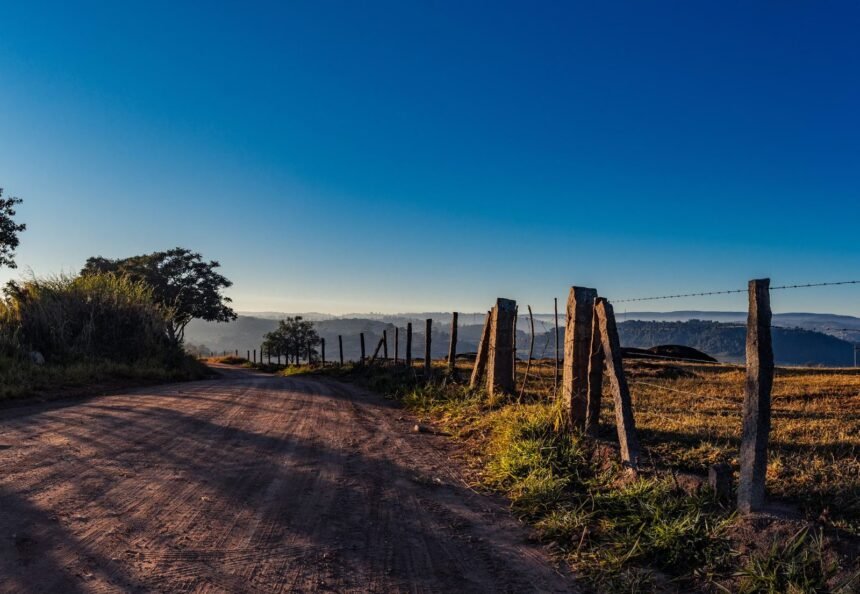
The census covers farming, forestry and aquaculture operations. Enumerators may follow a route set by a supervisor and check how to reach an establishment. A farm gate along a rural road can be the access point they need to record. As workers cover their assigned areas, they also update the list of establishments when they find new sites or confirm that a listed site falls outside the census scope.
Those updates and the interviews serve different purposes. The list records which establishments the census needs to cover in each work area, and the interviews supply information about those operations.
IBGE plans to collect field data from June through October 2027 and release preliminary findings in December 2027. The interval gives the institute time to review questionnaires and follow up on gaps before releasing the first figures. The final results are scheduled for December 2028, about a year after the preliminary release.
Other coverage includes the unverified November 17 global blackout claim, a review of Finnish news leads that did not establish a Brazil story, the Everton vs. Newcastle cup fixture and the story of an Ed Sheeran fan who married a lookalike.
Frequently Asked Questions
Who can apply for the census enumerator jobs?
Applicants must have completed the stage of basic education known as ensino fundamental and be at least 18 when hired. The minimum schooling requirement is below the high school level. Successful candidates must document their eligibility at hiring, including compliance with electoral obligations and, where applicable, military service obligations.
When is the census enumerator exam?
The exam is scheduled for January 31, 2027, from 1 p.m. to 5 p.m. Brasília time. The recruitment uses one objective test with 60 questions. Technical knowledge accounts for 30 questions, and the remaining 30 are split evenly between Portuguese and mathematics, with 15 questions in each subject.
How much do the temporary census jobs pay?
The fixed monthly rate is R$1,741, with up to R$2,629 more based on output, for maximum monthly pay of R$4,370. IBGE counts interviews and establishments visited, subject to its quality standards. The notice lists a separate R$1,192 food allowance and prorates fixed pay for the time actually worked.
How long can census enumerators expect to work?
The hiring notice estimates that the work may last up to six months and provides for 15-day contracts that IBGE can renew successively. Renewals depend on the census schedule, available funding and the worker’s performance. The notice specifies a 40-hour workweek and says IBGE evaluates workers every two weeks.